Korean Bibimbap
Highlighted under: Fusion Food
Korean Bibimbap is a vibrant and nutritious dish that combines rice with a variety of vegetables, protein, and a spicy sauce, creating a delightful meal that is both colorful and delicious.
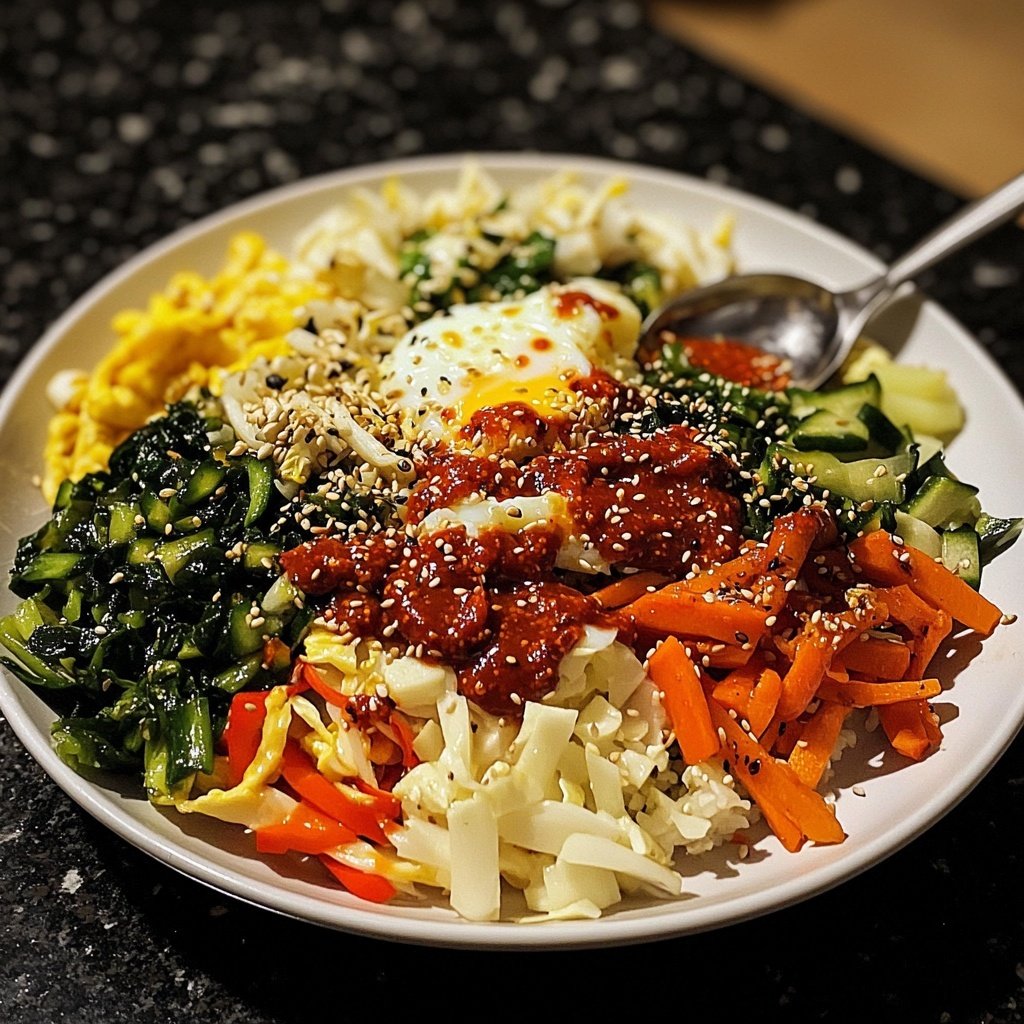
Korean Bibimbap is more than just a meal; it's a celebration of flavors and textures that represents the harmony of ingredients in Korean cuisine. Each bite is a balance of fresh vegetables, savory protein, and the unmistakable kick of gochujang.
Why You'll Love This Recipe
- A beautiful array of colorful vegetables that are visually appealing
- Customizable with your choice of protein and toppings
- Deliciously spicy and savory flavors that excite your palate
The Heart of Bibimbap
Bibimbap is more than just a meal; it’s a cultural experience that embodies the essence of Korean cuisine. This dish is known for its harmonious blend of flavors and textures, making it a comforting choice for any occasion. The combination of seasoned vegetables, protein, and rice creates a balanced meal that appeals to both the eyes and the palate.
Each ingredient in bibimbap serves a purpose, providing not only taste but also nutrition. The vibrant colors of the vegetables symbolize health and vitality, while the rice serves as a hearty base. This dish is often enjoyed as a communal meal, encouraging sharing and togetherness among family and friends.
Customizing Your Bibimbap
One of the best aspects of bibimbap is its versatility. You can easily customize the dish to cater to your dietary preferences or seasonal ingredients. Whether you prefer meat, seafood, or a vegetarian option, bibimbap accommodates all tastes. Feel free to swap out the beef for grilled chicken or shrimp, or use tofu for a plant-based version.
Additionally, the array of vegetables can be adjusted based on what you have on hand. Try adding mushrooms, radishes, or even kimchi for an extra zing. The key is to maintain a balance of flavors while keeping it colorful and appealing. Your bibimbap can be as unique as you are!
Serving Suggestions
Bibimbap is often served in a hot stone bowl, known as dolsot, which keeps the rice warm and creates a delightful crispy layer at the bottom. However, it can be just as satisfying when served in a regular bowl. To enhance the experience, consider pairing your bibimbap with a side of kimchi or pickled vegetables for an authentic touch.
For those who enjoy a bit of heat, add extra gochujang or a sprinkle of chili flakes over the top. This will enhance the dish's flavor profile and add a spicy kick that many find irresistible. Don't forget to mix everything thoroughly before enjoying each bite!
Ingredients
Gather all the ingredients before you start cooking.
For the Rice and Toppings
- 2 cups cooked rice (preferably short-grain or jasmine)
- 1 cup spinach, blanched
- 1 carrot, julienned
- 1 zucchini, julienned
- 1 cup bean sprouts, blanched
- 4 eggs (poached or fried)
- 1 cup sliced beef (or tofu for vegetarian option)
- 2 tablespoons vegetable oil
- Salt to taste
For the Sauce
- 2 tablespoons gochujang (Korean chili paste)
- 1 tablespoon sesame oil
- 1 tablespoon sugar
- 1 tablespoon rice vinegar
- 1 teaspoon minced garlic
- 1 teaspoon sesame seeds
Ensure everything is prepped before you start cooking to make the process smooth.
Cooking Steps
Follow these steps to create your delicious Bibimbap.
Prepare the Sauce
In a small bowl, mix together the gochujang, sesame oil, sugar, rice vinegar, minced garlic, and sesame seeds. Set aside.
Cook the Vegetables
In a skillet, heat the vegetable oil over medium heat. Sauté the carrots and zucchini separately until tender. Add the spinach and bean sprouts to the skillet and stir-fry until heated through. Season with salt to taste.
Cook the Protein
In the same skillet, cook the sliced beef (or tofu) until browned and cooked through. Season with salt and set aside.
Assemble the Bibimbap
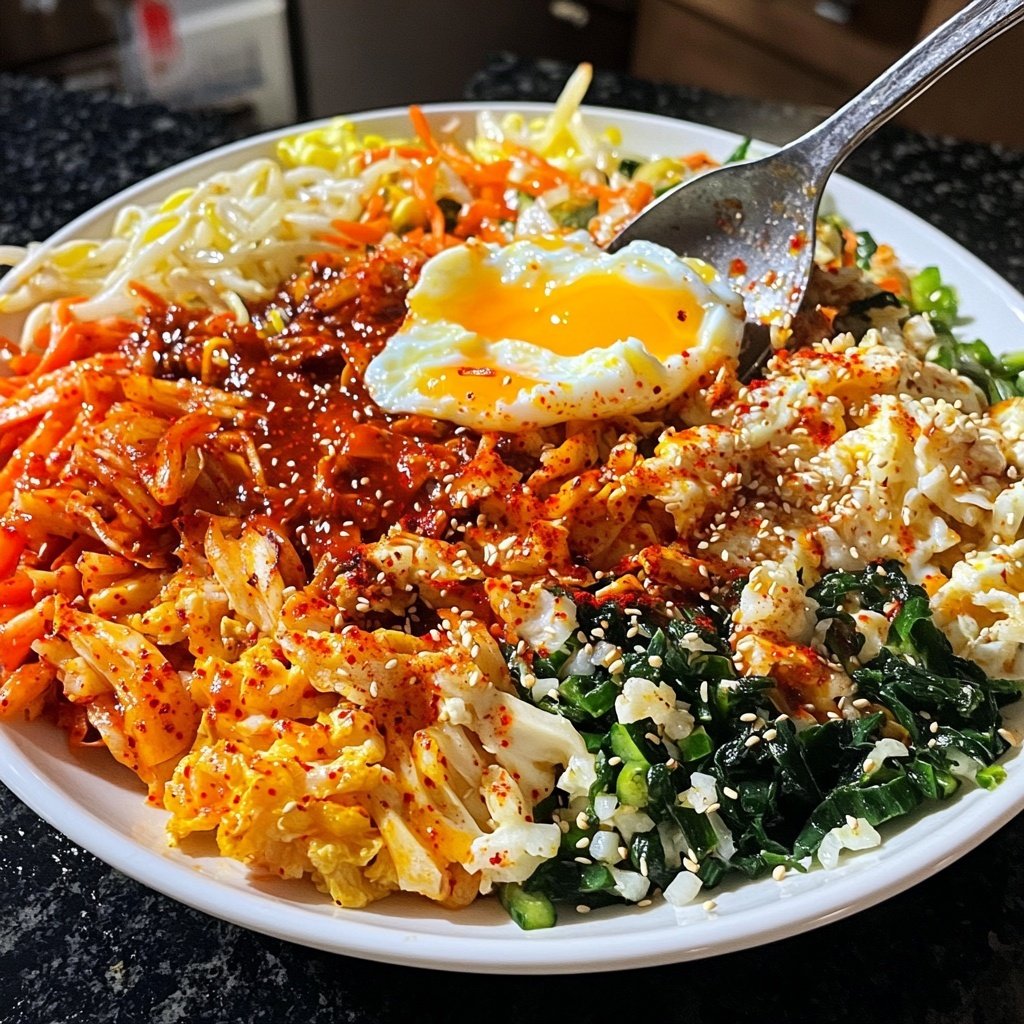
In a bowl, place a serving of rice. Arrange the cooked vegetables and protein on top. Add a poached or fried egg in the center.
Serve with Sauce
Drizzle the prepared sauce over the top and mix everything together before eating.
Enjoy your homemade Korean Bibimbap! Mix well to combine all the flavors.
Pro Tips
- Feel free to add other vegetables such as mushrooms or radishes based on your preference. For a vegetarian option, replace beef with tofu or tempeh.
Tips for Perfect Bibimbap
To achieve the best results, ensure that all vegetables are cooked separately. This technique not only preserves their individual flavors but also adds texture to the dish. Timing is crucial; cook the vegetables until just tender to maintain their vibrant colors and nutrients.
When preparing the rice, consider using short-grain rice, which provides a slightly sticky texture that helps the ingredients cling together. If you’re short on time, using leftover rice can work too, but be sure to reheat it well to revive its texture.
Storage and Leftovers
If you have leftover bibimbap, store the components separately to maintain freshness. The rice and vegetables can be kept in airtight containers in the refrigerator for up to three days. When you're ready to enjoy your leftovers, simply reheat the rice and vegetables in a skillet.
For the protein, ensure it’s reheated thoroughly to avoid any food safety issues. While bibimbap is best enjoyed fresh, repurposing leftovers can create a new meal experience, so don’t hesitate to mix and match ingredients for a unique twist!
Questions About Recipes
→ Can I make Bibimbap in advance?
You can prepare the vegetables and sauce in advance, but it's best to cook the rice and protein fresh for optimal texture.
→ What can I substitute for gochujang?
If you don't have gochujang, you can use a mix of miso paste with a bit of chili powder, although the flavor will differ.
→ Is Bibimbap gluten-free?
Yes, Bibimbap can be made gluten-free by ensuring that all sauces and ingredients are certified gluten-free.
→ Can I use brown rice instead of white rice?
Absolutely! Brown rice adds more fiber and a nutty flavor, though it may require a longer cooking time.
Korean Bibimbap
Created by: Ivy Sanderson
Recipe Type: Fusion Food
Skill Level: Intermediate
Final Quantity: 4 servings
What You'll Need
For the Rice and Toppings
- 2 cups cooked rice (preferably short-grain or jasmine)
- 1 cup spinach, blanched
- 1 carrot, julienned
- 1 zucchini, julienned
- 1 cup bean sprouts, blanched
- 4 eggs (poached or fried)
- 1 cup sliced beef (or tofu for vegetarian option)
- 2 tablespoons vegetable oil
- Salt to taste
For the Sauce
- 2 tablespoons gochujang (Korean chili paste)
- 1 tablespoon sesame oil
- 1 tablespoon sugar
- 1 tablespoon rice vinegar
- 1 teaspoon minced garlic
- 1 teaspoon sesame seeds
How-To Steps
In a small bowl, mix together the gochujang, sesame oil, sugar, rice vinegar, minced garlic, and sesame seeds. Set aside.
In a skillet, heat the vegetable oil over medium heat. Sauté the carrots and zucchini separately until tender. Add the spinach and bean sprouts to the skillet and stir-fry until heated through. Season with salt to taste.
In the same skillet, cook the sliced beef (or tofu) until browned and cooked through. Season with salt and set aside.
In a bowl, place a serving of rice. Arrange the cooked vegetables and protein on top. Add a poached or fried egg in the center.
Drizzle the prepared sauce over the top and mix everything together before eating.
Extra Tips
- Feel free to add other vegetables such as mushrooms or radishes based on your preference. For a vegetarian option, replace beef with tofu or tempeh.
Nutritional Breakdown (Per Serving)
- Calories: 540 kcal
- Total Fat: 18g
- Saturated Fat: 4g
- Cholesterol: 190mg
- Sodium: 600mg
- Total Carbohydrates: 75g
- Dietary Fiber: 4g
- Sugars: 6g
- Protein: 20g